- Why bathroom safety is the highest-leverage home change for seniors
- Medicare and Medicaid: what's actually covered
- Real cost breakdown, by component
- What install day actually looks like, hour by hour
- How major brands compare
- Sales-pitch red flags, and your legal right to cancel
- Questions to ask before you sign
- When a walk-in tub isn't the right call
- Frequently asked questions
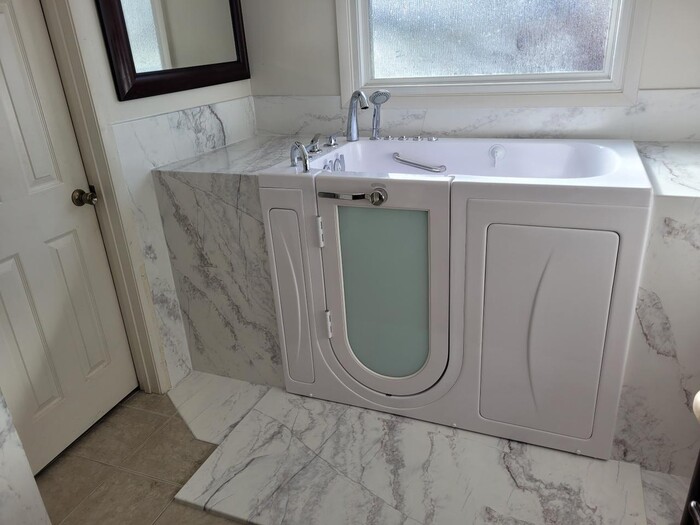
Why this matters more than most home upgrades
Falls are the leading cause of injury death among adults 65 and older, responsible for more than 38,000 deaths in 2021 alone, and older adults visit the emergency room for fall-related injuries nearly 3 million times a year, according to CDC data. About one in four adults 65 and older falls each year. Bathrooms account for a disproportionate share of those falls — a wet, hard-surfaced room with a step to clear is a specific, fixable hazard, unlike many other fall risks.
A 2023 analysis of Medicare beneficiaries who had fallen found that 55.5% had made some kind of bathroom modification, but 40.2% of those with repeated falls still had none in place. That gap — between recognizing the risk and actually acting on it — is the space this guide is written for.
Medicare and Medicaid: what's actually covered
Original Medicare does not cover walk-in tubs. Medicare classifies durable medical equipment (DME) narrowly — wheelchairs, hospital beds, walkers — and a walk-in tub falls under "home modification," a category Medicare doesn't pay for regardless of medical necessity. This surprises a lot of people, understandably, since a tub can genuinely prevent the kind of injury Medicare spends billions treating after the fact.
Some Medicare Advantage plans have started offering supplemental benefits — flex cards or home-safety allowances — that can sometimes be applied toward a portion of a walk-in tub or the labor. This varies plan by plan and year by year, so the only reliable way to know is to call the number on the back of your specific Advantage card and ask directly whether "home safety modification" or "bathroom safety device" benefits are included this plan year.
Medicaid works differently. Standard state Medicaid typically doesn't cover walk-in tubs either, but most states run Home and Community-Based Services (HCBS) waivers — programs specifically designed to help people stay out of nursing facilities by funding home modifications, including bathroom safety equipment. Eligibility is usually tied to both income and a documented need for a nursing-facility level of care, and many states have waiting lists. Search "[your state] HCBS waiver home modification" or call your state's Medicaid office directly and ask specifically about waiver programs — this is not something the standard Medicaid card covers automatically.
Veterans: the VA's Home Improvements and Structural Alterations (HISA) grant can fund bathroom modifications for eligible veterans with a service-connected or non-service-connected condition. Financing: most tub companies and many contractors offer 0% or low-interest financing directly — ask before assuming full cost is due upfront. Local nonprofits: some Area Agencies on Aging maintain small home-modification grant programs; your local AAA (findable via eldercare.acl.gov) can tell you what exists in your county.
Real cost breakdown, by component
National "average cost" numbers you'll see quoted are close to meaningless because labor and plumbing complexity swing the total more than the tub itself does. Here's the cost broken into what's actually driving it:
| Component | Typical Range | What Changes the Price |
|---|---|---|
| Base soaking tub (no jets) | $2,000 – $4,500 | Size, acrylic vs. gelcoat, door style (inswing vs. outswing) |
| Hydrotherapy jets | +$1,000 – $2,000 | Optional — improves comfort, not required for fall safety |
| Air jets / heated seat | +$500 – $1,500 | Optional comfort upgrade |
| Standard install (existing plumbing works) | $1,500 – $3,000 | Access, wall/floor condition |
| Install with plumbing relocation | $3,000 – $6,000+ | Older homes, moved drain/supply lines |
| Electrical work (for jetted models) | +$300 – $1,200 | Whether a dedicated GFCI circuit already exists |
| Typical all-in total | $5,000 – $12,000 | Region, contractor, features chosen |
Figures are directional estimates compiled from publicly available 2025–2026 industry pricing data and installer quotes; they will vary by region and specific contractor. Always get a written, itemized quote — see the checklist below for exactly what to ask for.
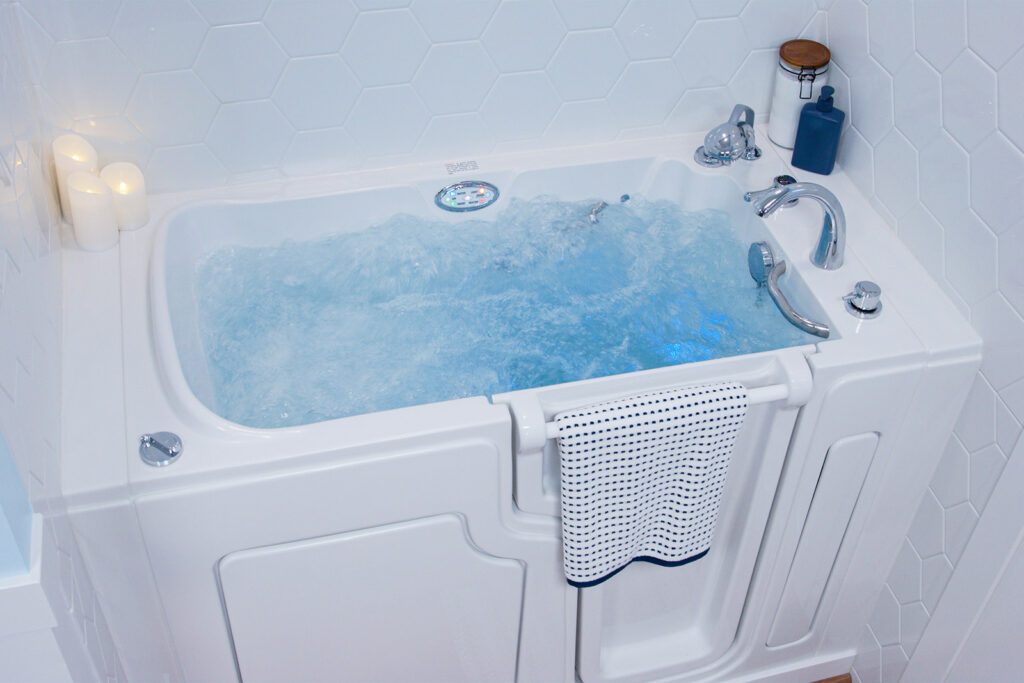
What install day actually looks like, hour by hour
Most sites tell you "installation takes one day" and stop there. Here's what that day actually involves for a standard install where existing plumbing doesn't need to move — useful for knowing what to expect and what a rushed or corner-cutting crew looks like by comparison.
Old tub removal
Crew removes the existing tub, surround, and any damaged drywall. This is the loudest, messiest part of the day — expect dust protection to be laid down through the house, not just the bathroom.
Plumbing inspection
This is the moment that determines whether the day stays on schedule. If the drain and supply lines line up with the new unit, work continues. If not, this is when a legitimate crew tells you the timeline is changing — a crew that stays silent about a plumbing problem and pushes forward anyway is a warning sign.
Tub setting and sealing
The new unit is set, leveled, and connected. Door seal installation happens here — ask to see this step, since a poorly seated door seal is the single most common source of walk-in tub leak complaints down the line.
Surround and trim
Wall surround panels go up, fixtures are attached, and any electrical work for jets is completed and tested.
Water test and walkthrough
A full fill-and-drain cycle checks for leaks before the crew leaves. Insist on seeing this happen — don't accept "it's fine" without a live water test while someone is still there to fix it if it isn't.
If plumbing needs to move or subfloor repair is required, add one to three days. A legitimate company tells you this is a real possibility before the sales contract is signed, not on install morning.
How major brands generally compare
We don't install-test every brand ourselves, so treat this as a starting orientation for questions to ask each company you contact, not a ranked recommendation.
| Brand Type | Typical Position | What to Ask Them Specifically |
|---|---|---|
| National franchise installers | Higher price, standardized process, wider warranty network | Is my install subcontracted locally, and who handles warranty service in my area? |
| Regional/local specialty installers | Often more price flexibility, faster scheduling | How many walk-in tubs has this specific crew installed, and can I get references from the last 90 days? |
| Big-box / general contractor install | Bundled with other bathroom work, variable specialization | Has the installer been specifically trained/certified on this tub model? |
Sales-pitch red flags — and your actual legal right to cancel
Walk-in tubs are often sold through in-home consultations, which is a legitimate way to sell a product that needs measuring — but it's also the exact setting the FTC's Cooling-Off Rule exists for, because in-home, one-time-offer sales pressure is a known pattern.
- "This price is only good if you sign today." A legitimate quote doesn't expire in the same hour it's given. Ask for it in writing and take at least 24 hours.
- No written, itemized quote before you sign. If the number is only ever spoken aloud, that's a problem — insist on a line-item breakdown matching the cost categories above.
- No mention of your cancellation rights. By law, if you sign a contract worth $25 or more in your own home, the seller must verbally tell you about your right to cancel and give you two copies of a cancellation form, plus a copy of the contract. If nobody mentions this, ask for it directly.
- Vague permit answers. "We don't usually need one" is a red flag in most jurisdictions for plumbing work. Ask who is pulling the local permit and get it in writing.
- Reluctance to give recent local references. Testimonials on a company's own website are not the same as a phone number for someone whose tub was installed in the last few months.
If you sign a home-improvement contract in your own home (not at the seller's showroom or place of business) for $25 or more, the FTC's Cooling-Off Rule generally gives you until midnight of the third business day after the sale to cancel in writing for a full refund — no reason required. This doesn't apply if you negotiated and signed at the seller's own permanent business location. If you're unsure which applies to your situation, the FTC's consumer guidance at consumer.ftc.gov covers the exact conditions.
Questions to ask every company before you sign
- Is the quote itemized by tub, labor, and any plumbing/electrical work separately?
- What's the realistic timeline if plumbing needs to move — not just the best-case number?
- What's the door-seal warranty specifically, and what voids it?
- Who pulls the local plumbing permit, and can I see it filed?
- Can I get three references from installs completed in the last 6 months?
- Will you confirm my 3-day cancellation right in writing, per the FTC Cooling-Off Rule?
When a walk-in tub isn't the right call
- Fill-and-drain wait time (often several minutes before it's safe to get in or out) can be uncomfortable for people sensitive to cold — ask to test a floor model before buying if possible.
- If mobility is expected to decline further, a curbless walk-in shower conversion has no threshold to clear at all, versus a tub's low step-in — worth comparing directly against your specific trajectory.
- Resale value: some home buyers see walk-in tubs as a drawback. If you expect to sell within a few years, weigh this against a shower conversion.
- If budget is the binding constraint, a no-drill suction grab bar, a shower bench, non-slip strips, and a handheld showerhead cost a fraction of the price and meaningfully cut fall risk on their own.
Frequently asked questions
Does Medicare cover walk-in tubs?
Generally no under Original Medicare, since it's classified as a home modification, not durable medical equipment. Some Medicare Advantage plans offer supplemental home-safety allowances — check your specific plan.
Does Medicaid cover walk-in tubs?
Not under standard Medicaid, but many states' HCBS waiver programs can fund home safety modifications for eligible beneficiaries. Eligibility and availability vary by state.
How long does installation take?
One to two days when existing plumbing lines up with the new unit; three to five days or more if plumbing needs to move or subfloor repair is required.
Can I cancel after signing?
If signed in your home for $25 or more, the FTC Cooling-Off Rule generally gives you until midnight of the third business day to cancel in writing for a full refund.
Is a "walk-in tub shower combo" different from a regular walk-in tub?
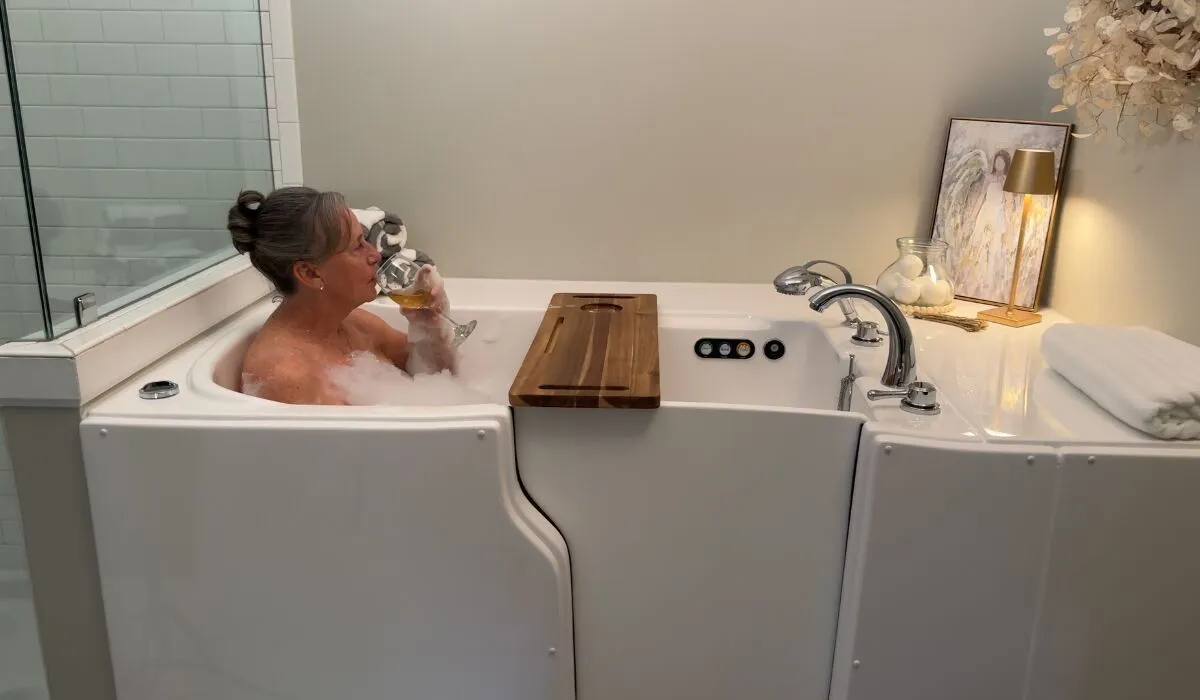
Most walk-in tubs already include a handheld or overhead shower option built in, so you can bathe seated or shower standing in the same unit — this is usually what's meant by a "walk-in tub with shower" or "shower combo" model, rather than a separate category. When comparing quotes, confirm specifically whether a shower head and curtain/door setup for standing use is included, since some base models charge extra for it.
What's the difference between a "jacuzzi walk-in tub" and a walk-in tub with jets?
"Jacuzzi" is a specific hydrotherapy jet manufacturer, but it's also become a generic term people use for any jetted tub. Most walk-in tub brands offer hydrotherapy jets as an add-on (see the cost table above), regardless of which company actually manufactures the jet system — worth asking a company directly which jet brand and warranty applies rather than assuming "jacuzzi" means one specific product.
Sources
- Centers for Disease Control and Prevention — Older Adult Fall Prevention, cdc.gov/falls
- PMC — "Bathroom modifications among Medicare beneficiaries with a fall history," National Library of Medicine
- Federal Trade Commission — Cooling-Off Rule, consumer.ftc.gov
- Administration for Community Living — Eldercare Locator, eldercare.acl.gov
This link goes to a provider network we've researched. See our methodology for how referrals work on this site.