Installs without tools in under a minute, holds a manufacturer-stated 240 lbs on the right surface, and costs a fraction of a permanent bar. The catch is entirely about which surfaces actually hold a seal — covered below.
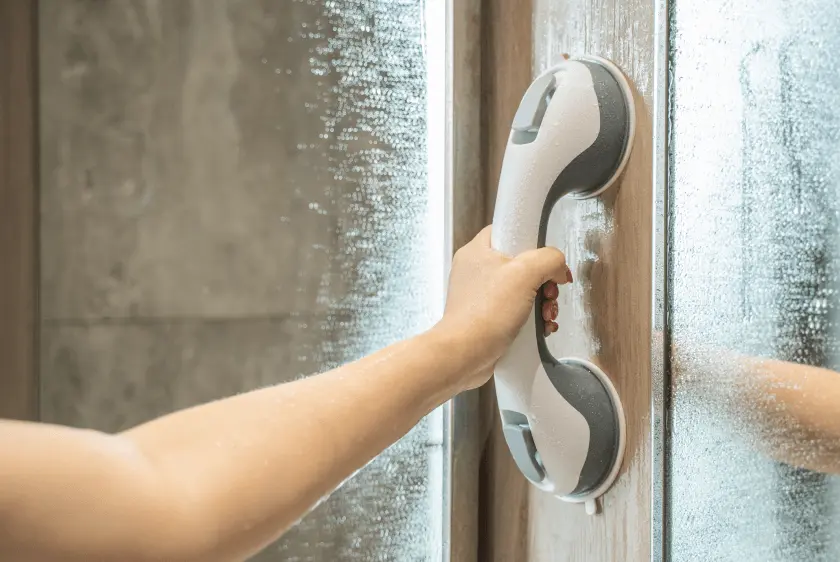
How they actually work
A suction grab bar uses a large industrial suction cup — usually with a mechanical lever or lock that increases the vacuum seal beyond what hand pressure alone creates — to hold a handle against a smooth surface without screws or adhesive. Done right, this can genuinely hold significant weight. The catch is entirely about the surface and the seal, not the concept.
Which surfaces they hold on — and which they don't
| Surface | Suction Performance |
|---|---|
| Fiberglass or acrylic shower/tub surround | Good — smooth, non-porous, typical suction-cup use case |
| Glazed ceramic tile (no texture) | Good, if the grout lines aren't crossing the cup's full contact area |
| Textured "slip-resistant" tile | Poor to none — texture breaks the seal |
| Natural stone (unsealed) | Poor — porous surface can't hold vacuum |
| Wallpaper, painted drywall, or plaster | Not suitable — not a shower-appropriate mounting surface regardless of suction |
If you don't know your surface type, pressing a hand-sized suction cup (even a cheap one, as a test) firmly against the wall in the exact spot for 60 seconds and gently tugging is a reasonable way to check before buying — if it won't hold there, a suction grab bar likely won't either.
Suction bar vs. a permanent stud-mounted grab bar
| Suction Grab Bar | Stud-Mounted Grab Bar | |
|---|---|---|
| Install | No tools, minutes, no damage | Requires drilling into studs, ideally a contractor |
| Typical cost | Under $50 | $150–$400 installed |
| Renter-friendly | Yes | Usually requires landlord approval |
| Best for | Light balance support, travel, testing whether a grab point helps before committing to permanent install | Full weight-bearing transfers, wheelchair/shower-chair use, higher mobility need |
| Reliability over time | Depends on regular seal checks; can fail if not maintained | Doesn't rely on a seal — mechanically fixed |
A suction grab bar is a genuinely useful low-cost first step, especially for renters or as a "try before you commit to drilling" option. If a transfer involves bearing most or all of a person's body weight — getting in and out of a shower chair, or significant balance loss — that's a stud-mounted bar situation, not a suction one. Check the seal before every use if you're relying on one regularly, the same way you'd check any safety equipment.
Where this fits with the rest of your bathroom safety plan
If you're already planning a bigger change — a walk-in tub or a shower conversion — a suction grab bar is a reasonable stopgap while you wait for install, or a way to figure out exactly where a permanent bar should go before the crew arrives. If budget is the actual constraint and a full remodel isn't happening soon, this is one of the highest-value, lowest-cost changes on this entire site.
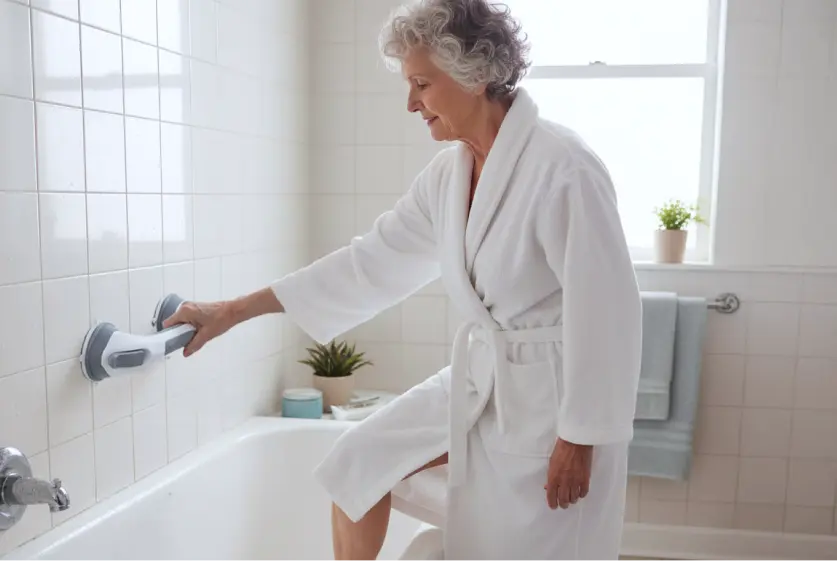
Frequently asked questions
Are suction cup grab bars safe for seniors?
They can meaningfully help with balance support on the right surfaces, checked regularly. They're not a substitute for a stud-mounted bar for full weight-bearing transfers.
Do they work on all shower surfaces?
No — smooth, non-porous surfaces like fiberglass, acrylic, and glazed tile work well; textured tile and natural stone generally don't hold a seal.
How often should the seal be checked?
Before each use is the safest habit, since suction can weaken with soap buildup, temperature change, or time.
This link goes to a provider we've researched. See our methodology for how referrals work on this site.